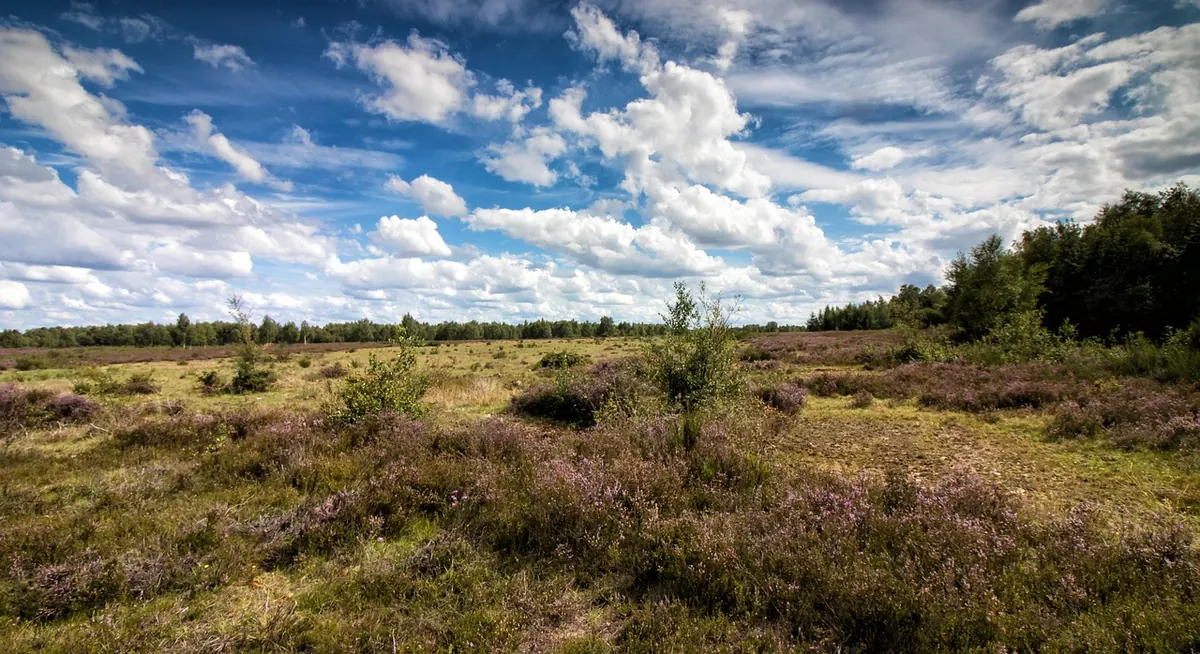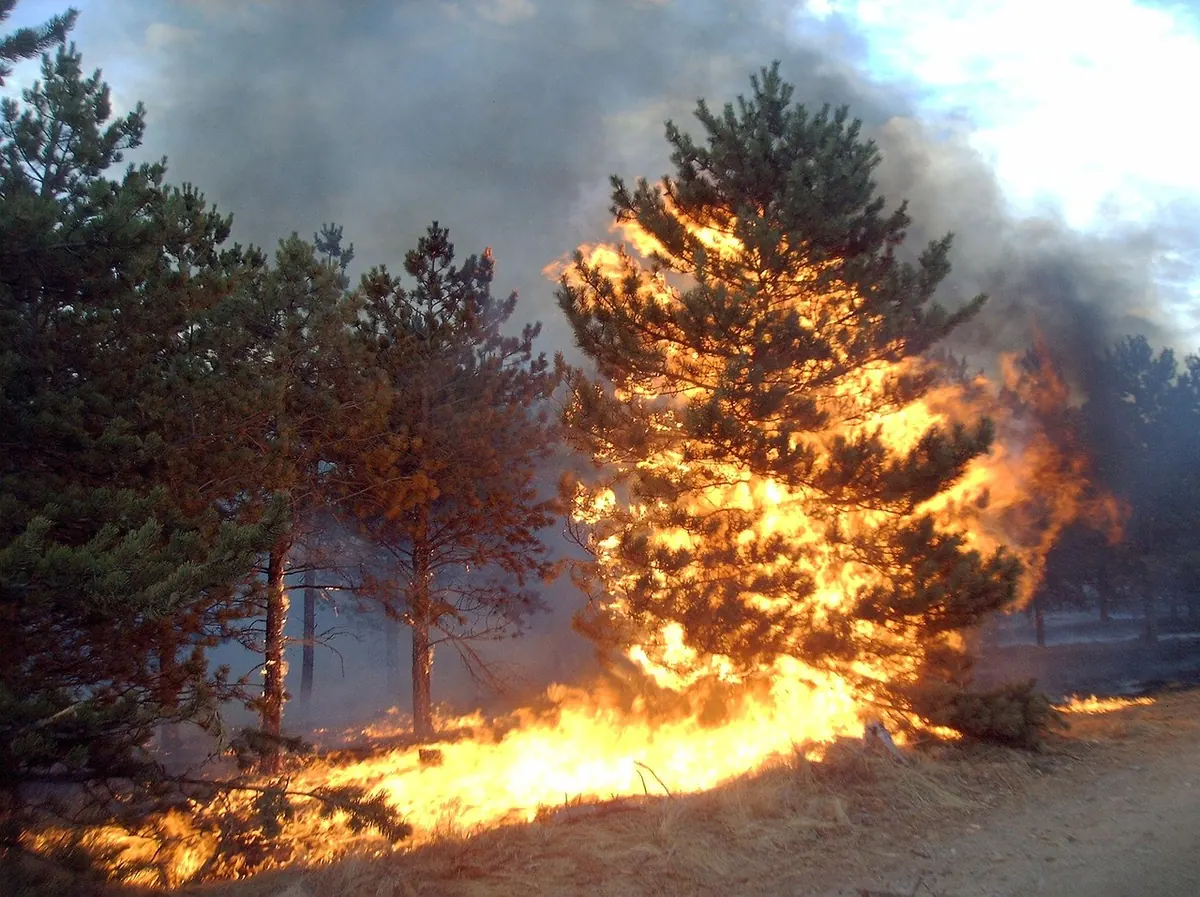
Sun-bleached heather, gorse coming into flower, a sandy track and a warm breeze — the classic heathland postcard. On the wrong day, the same view is one of the most flammable places you can stand. Heathland burns hot and fast because it is built from fine, oily, airy fuel stacked on top of years of litter. Once that litter is dry, it does not need a long spell of heat to catch. It needs a spark.
Reading the conditions is not about being alarmist. It is about knowing when to stub a cigarette out properly, when to reroute a walk, and what to do when you see smoke on the horizon. The difference between a pleasant afternoon and a fast-moving incident often comes down to a few small observations — and a willingness to change plans before the first flame is visible.
What makes a heath burn: three ingredients
A fire needs fuel, oxygen and an ignition source. On open heathland, oxygen is never the problem. What changes from day to day is how dry the fuel has become — and how easily it can move.
Drought, measured in days rather than degrees
The temperature on the day matters less than how long it has been since meaningful rain. A heath can look green while its surface layer is crisp. Fine fuels — dead grass, dried moss, the loose upper litter of heather — dry out within hours under a warm wind. Deeper peat and the root mat dry out over weeks. That is why the dangerous days cluster at the end of a dry spell, not at the start of it.
A single heavy shower can be misleading. If it falls fast on hard, dry ground, much of it runs off before it soaks in. Two days later the surface may be damp while the litter beneath is still powder-dry. A better question than “Did it rain?” is “Has the ground had time to drink?”
Wind: the multiplier
Wind does three jobs at once. It pushes the flame front across the ground, it pulls moisture out of the fuel just ahead of the fire, and it carries burning embers over tracks, streams and firebreaks that look like safe lines on a map. A gusty, shifting wind is worse than a steady one, because the direction of travel can change in minutes. Fire also runs uphill faster than most people can walk, which is why steep ground should change your plans early rather than late.
On a heath, wind is often stronger than it feels in a car park or garden. Open ridges, gaps between gorse blocks and straight tracks act like chimneys. If the heather is moving in waves and the sound of the wind is constant, assume the fire would move faster than you expect.
Litter: the layer you can't see
Under the heather canopy sits a loose mix of dead stems, bracken litter, pine needles and dried moss. It is full of air and burns like the kindling under a bonfire. Gorse carries oils that flare and throw sparks. Peat behaves differently again: it rarely produces a clean flame, preferring to smoulder underground, holding heat for days or weeks and resurfacing long after the surface looks extinguished.
This hidden layer is why a heath fire can seem to disappear and then reappear behind you. It is also why firefighters may stay on scene long after the flames are out, damping down hot spots that a walker would never notice.
Reading the ground as you walk
You do not need equipment to judge how dry a heath is. Your boots and hands will tell you plenty.
- Heather stems snap instead of bending, and the tips feel brittle rather than springy.
- Dead grass has gone the colour of straw, not simply green with a dry patch here and there.
- Moss and lichen on the path crunch underfoot.
- Bog pools and small streams are low, with cracked mud at the edges.
- Loose litter lifts and skitters along the track in the wind.
- Peat feels spongy-dry, and dust rises where you scuff it.
- Gorse pods crackle or rustle in the breeze, and dry seed heads rattle.
Any one of those is a hint. Several together on a windy afternoon should change how you behave: no open flame, no disposable barbecue, no parking on vegetation, and one eye on the horizon.
The weather signals that should change your plans
Fire services watch a combination of heat, humidity, wind and recent rainfall. You can apply the same rough thinking at home.
- A run of days with no proper rain, or rain that only dampened the surface.
- Dry mornings — no dew on the grass — and air that feels dry on the lips and hands.
- A steady wind that has crossed dry land, especially if gusts and shifts are forecast.
- Warm nights that stay mild enough to prevent dew forming, so fine fuels never recover overnight.
- Low humidity, high temperatures and strong sunshine during the middle of the day.
- Dry thunderstorms or forecasts of lightning without useful rain.
- Local fire danger signs, moorland restrictions or “no barbecue” notices.
- A smell of burning, a haze on the horizon, or ash settling on cars and leaves.
If several of these line up, treat the heath as a place to pass through rather than linger. That is not overcaution. It is the same logic as avoiding a cliff edge in a gale.
If the ground crunches underfoot, the wind is rising and there is no dew on the grass, assume a spark will travel. Act before you see smoke.
What to do if you see smoke or fire
Smoke on a heath can travel a long way and may look smaller than it is. Do not assume someone else has already called it in. A fast, clear report helps crews find the fire before it reaches a track, a plantation or a village.
- Stop and assess. Note the wind direction, the slope and the colour of the smoke. Dark, oily smoke often means gorse, peat or rubber; white smoke may be grass or damp vegetation. Do not walk closer to get a better look.
- Call the emergency services. Give the best location you can: a grid reference, a what3words address, a named track, a car park or a prominent landmark. Say what is burning and whether people or buildings are nearby.
- Move away from the fire’s path. Do not run uphill or into dense vegetation. Head for a wide track, hard standing, a mown firebreak, a stream or ground that has already burned. Move across the wind if you can, rather than straight into it.
- Stay out of smoke. Smoke from heath and peat can be thick and toxic. Keep low if you must move through it, cover your nose and mouth with a cloth, and avoid gullies where smoke collects.
- Do not drive into smoke. If you are in a vehicle, turn around if you can do so safely. If you cannot, park in a cleared area away from vegetation, close windows and vents, and call for advice.
- Report smouldering ground. Peat can hold heat underground. If you see steam, smoke or glowing ash after the flames are gone, tell the fire service. It can reignite hours or days later.
Preventing ignition: small habits that matter
Most heath fires are started by people, often accidentally. A disposable barbecue that seems dead can stay hot for hours. A cigarette end thrown from a car can land in dry grass. A parked car’s hot exhaust or catalytic converter can touch tinder-dry vegetation. Even a discarded glass bottle can act as a lens in strong sun.
- Leave the barbecue at home on dry, windy days. If you must cook outdoors, use a designated area and never leave it unattended.
- Stub cigarettes out on bare ground or in a tin, then take the butt away. Do not flick ash from a car window.
- Park on hard standing or bare gravel, not on grass, heather or leaf litter.
- Take glass, cans and food packaging home. Litter is fuel as well as pollution.
- Keep to established tracks. Off-road vehicles and machinery can throw sparks from exhausts or hot parts.
- Report anyone lighting an illegal fire, and report smoke immediately.
After the fire: a landscape that keeps burning
A burned heath can look extinguished while it is still dangerous. Peat fires can creep underground, surviving rain and cool nights. Roots and seed banks may be destroyed, and the bare surface is vulnerable to erosion. Some heathland species recover slowly; others may not return for decades. That is why every preventable fire matters, even a small one that only blackens a few metres.
If you walk across a recently burned area, stay on the track, avoid disturbing ash and report any new smoke. The fire may be over for you, but it may not be over for the ground.
A simple rule for dry days
You do not need to memorise fire danger ratings to make a sensible decision. Look, listen and feel. Is the heather brittle? Is the wind pushing litter along the track? Is there no dew underfoot? If the answer is yes, the heath is ready to burn. Keep flames out of it, keep an escape route in mind, and if you see smoke, call it in and move away.
The postcard view is still worth enjoying. Just read it like a local: not only for its colour and space, but for how dry it sounds under your boots.
Photo: galadrim / Pixabay