Heather Burning vs. Mowing: Comparing Two Ways to Manage Heathland
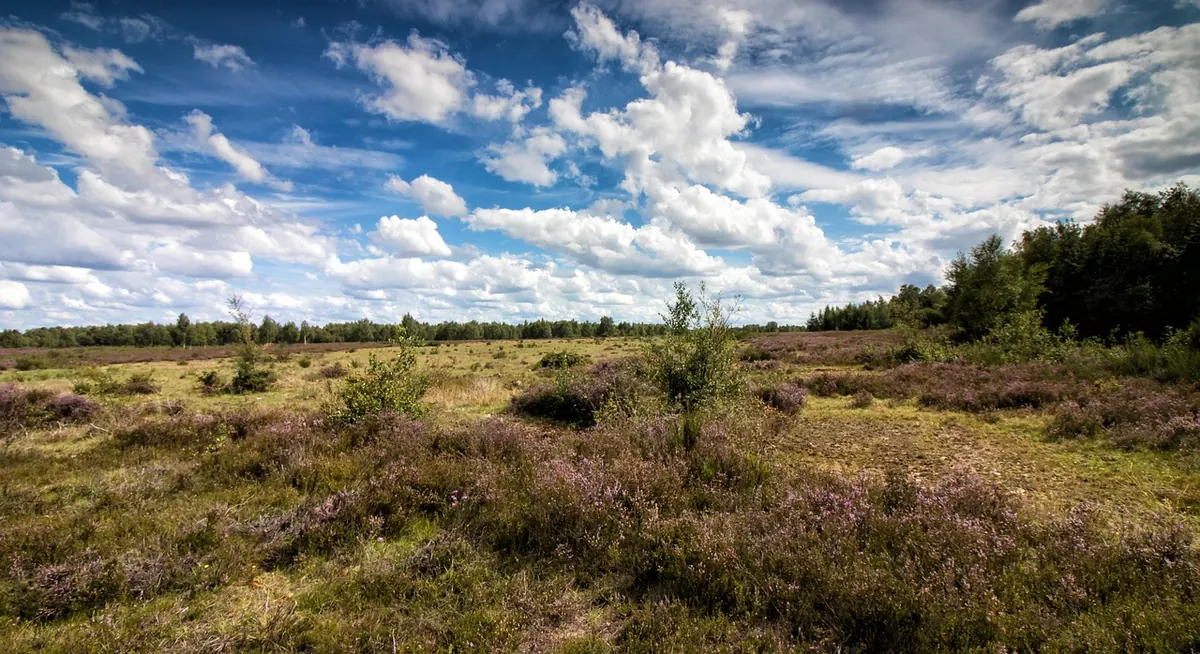
Heathland looks wild, but almost none of it is. Left alone, most lowland and upland heaths in Britain and northern Europe would scrub over with birch, pine and gorse, and the heather that gives them their colour would shade out. Keeping a heath open means interrupting that, block by block. Two tools do most of the work: a drip torch and a mower. Both reset the clock on heather. What differs is everything that happens around the reset.
Why heather needs resetting
Heather grows in even-aged stands. Untouched, a whole hillside reaches the same stage at once — leggy, woody, with bare gaps underneath and a canopy too sparse to shelter much. Old stands are also more vulnerable to heather beetle, which can strip a moor in a season.
The life cycle is easy to see once you know it. Pioneer heather, up to about six years old, is short, bright and palatable. Building heather, roughly six to fifteen years, is the dense, springy stuff that grouse and sheep both favour. Mature heather, fifteen to twenty-five years, still flowers well but begins to open up underneath. Beyond that comes the degenerate phase: long woody stems, a thatch of dead material, a canopy that lets light down to the moss — and eventually to birch seedlings.
Managers want the same thing in principle: a mosaic. Short young heather for grazing and grouse, taller stands for nesting cover, mosses and bare ground in between, all within a few hundred metres. Burning and cutting both deliver that mosaic. The difference lies in the ash, the litter, the soil, and the insects that don't survive the day.
The case for burning
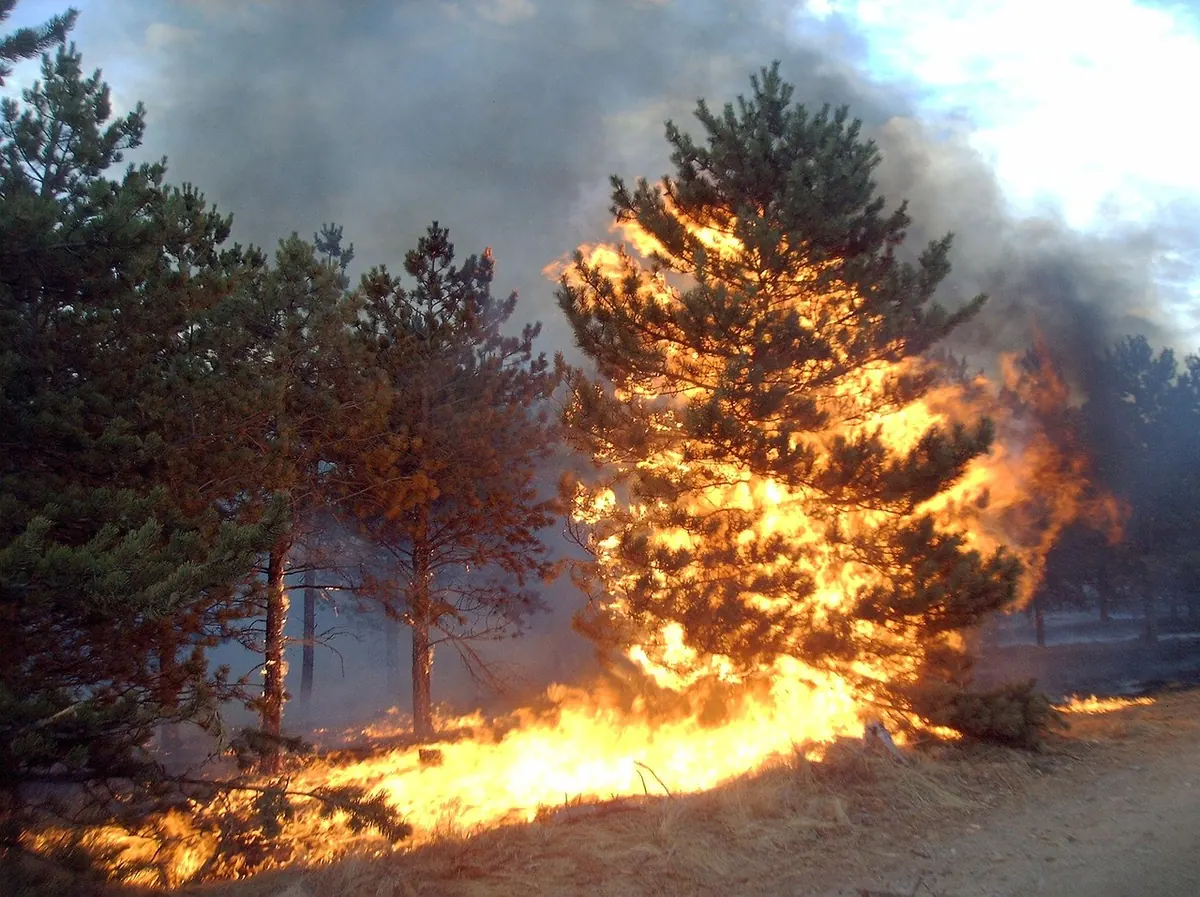
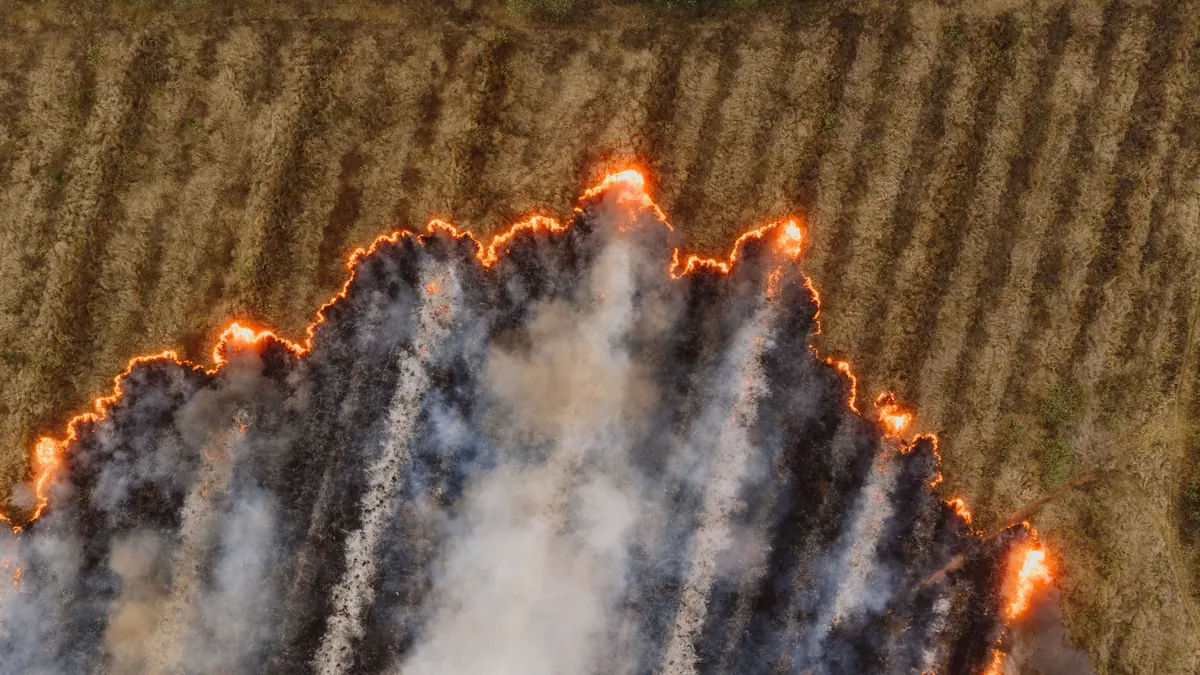
Burning is the older method and the one that shaped the look of British moors. A keeper works with the wind, lighting a line of fire that creeps against it or drops downhill, so the flames move slowly, stay low and go out at the edge of the strip. Strips are typically ten to thirty metres wide and a few hundred metres long — narrow enough that heather on either side can seed or creep back in, small enough that the fire never gets away.
What a controlled burn does
A burn removes the standing crop and most of the litter layer in one pass. Nitrogen and sulphur go up in smoke; phosphorus, potassium and calcium stay behind in the ash, which for a year or two acts as a mild fertiliser and pushes the soil pH up a little. The heather regenerates from buds at the base of the burnt stems, and often from seed stored in the soil, so a good burn can produce dense pioneer growth within two or three seasons.
Burning also tends to keep heather dominant. Repeated burning favours the plant it is aimed at, which is precisely why grouse managers have used it for a century and a half — and precisely why conservationists worry about it on thin, acidic soils.
Where it works best
Burning suits dry, freely draining heaths on mineral soil or shallow peat, on slopes where a fire can be controlled, and where the management objective is heather itself. It is cheap compared with machinery, needs no tracks or access, and can be done on ground too steep, too soft or too broken for a mower. It comes with a legal window, though: the burning season in England, Wales and Scotland generally runs from 1 October to 15 April, outside the bird nesting period. In England, burning on deep peat now requires a licence, and Scotland has moved to a licensing system with restrictions on peatland — a clear signal that the rules have tightened.
The case for mowing
Mowing does the same job with a blade. A tracked or low-ground-pressure machine, often on wide tyres, cuts strips or blocks of heather at roughly ten to twenty centimetres above the ground, leaving the stems and the moss layer intact. The cut material — brash — is either left where it falls, raked off, baled, or in some places sold on as bedding, compost or biomass fuel.
What the blades leave behind
Nothing burns, so nothing is lost to the air. Nutrients stay on site, mostly locked in the cut stems, which means no flush of ash and no pulse of easily washed nutrients into streams. The stump layer survives, along with the mosses, lichens, fungi and the seed bank beneath. Regrowth comes from those cut stems rather than from a scorched base, and it is usually a little slower than after a burn, but just as dense.
The catch is the brash. A thick mat of cut heather shades the ground and can suppress the very regrowth it is meant to encourage, and as it breaks down it releases nutrients that favour grasses — purple moor-grass and wavy hair-grass especially — over heather. Leaving brash in place on a wet, fertile site is one of the quickest ways to turn a heather moor into a grass moor.
Where cutting wins
Mowing is the method of choice on wet heaths, on peat, near watercourses and reservoirs, close to houses and roads, and anywhere smoke would be a nuisance or a health risk. It is also more forgiving of timing: cutting can be done later into the spring than burning in some circumstances, and a damp week does not ruin the plan. Water companies in the Peak District and elsewhere have funded cutting and brash removal on catchments precisely because it reduces discolouration and sediment in the water supply.
Where the two methods diverge
Soil, nutrients and the litter layer
Burning is a net export of carbon and nitrogen and a short-term boost of base cations. Cutting is closer to a redistribution: if brash is left, the nutrients stay put; if it is removed, the site is quietly stripped of fertility, which over decades can be exactly what a heath needs. On deep peat, fire risks igniting the peat itself, and a smouldering peat fire can burn underground for weeks, releasing centuries of stored carbon.
Invertebrates and the food web
A fire front kills almost everything it passes over: beetles, spiders, caterpillars, the eggs and pupae in the litter. Cutting leaves more behind, and the uncut strips beside a mown block act as refuges from which invertebrates recolonise. This matters beyond sentiment — invertebrate abundance in the first weeks of summer is what grouse chicks, waders, lizards and a great many songbirds actually eat. Studies on English moors have generally found cutting kinder to surface-dwelling invertebrates than burning, though the picture varies with site, season and how the burn was conducted.
Carbon, smoke and water
Burning releases carbon dioxide and particulates immediately; cutting releases carbon slowly as the brash decays, or not at all if the material is removed and used. Smoke from muirburn is a recognised air-quality and public-health concern, especially where moorland sits above a town. Runoff after a burn carries ash, sediment and dissolved organic carbon into streams, which is why burns near intakes are avoided. Cuts, done properly, leave the hydrological surface largely intact.
Cost, kit and the weather window
Burning is labour-intensive but inexpensive in equipment: a torch, a knapsack, a team of beaters and a lot of experience. Cutting needs a specialist contractor, a machine that can cross soft ground without rutting it, and somewhere for the brash to go. Wet autumns and early springs often close the cutting window; dry, still, cool days are what burns need. In practice, the weather decides as much as the ecologist does.
A mixed mosaic: using both on one moor
Most well-managed moors now use both. Steep, dry, heather-dominant slopes get burnt on a rotation of ten to twenty years. Wet flushes, peat edges, stream margins and accessible flats get cut. Ravines and scree get left alone entirely, as refuge habitat. The result is not a choice between two methods but a pattern of patches of different ages and origins — and that variety, more than any single technique, is what keeps a heath rich.
Match the tool to the site, not the site to the tool: the best mosaic on a moor is usually the one that used both.
Choosing a method: a short checklist
- What is the soil? Deep peat, wet flushes and shallow soils over rock argue for cutting or for leaving well alone.
- How steep and how broken is the ground? If a machine cannot reach it safely, burning may be the only option.
- What is nearby? Houses, roads, reservoirs and intakes all push you towards cutting.
- What do you want growing in ten years? Heather dominance favours burning; grass control and nutrient stripping favour cutting with brash removal.
- What is the legal position? Check the burning season, peat restrictions and any licensing requirement before you light anything.
- Can you graze it afterwards? Light grazing after either treatment keeps regrowth from becoming rank; heavy grazing undoes the work.
The bottom line
Neither method is a free reset. Burning is quick, cheap and effective on dry heather ground, but it costs carbon, invertebrates and air quality, and it is becoming harder to justify on peat. Mowing is gentler on soil and wildlife but slower, costlier, and only as good as the disposal of its brash. The real skill is not picking a side. It is reading a hillside — its soils, its water, its birds, its access — and cutting or burning in small blocks, on rotation, for long enough that the mosaic holds.
Photo: K / Pexels